
Blue Whale vs. Humpback Whale: Key Differences & Similarities
-
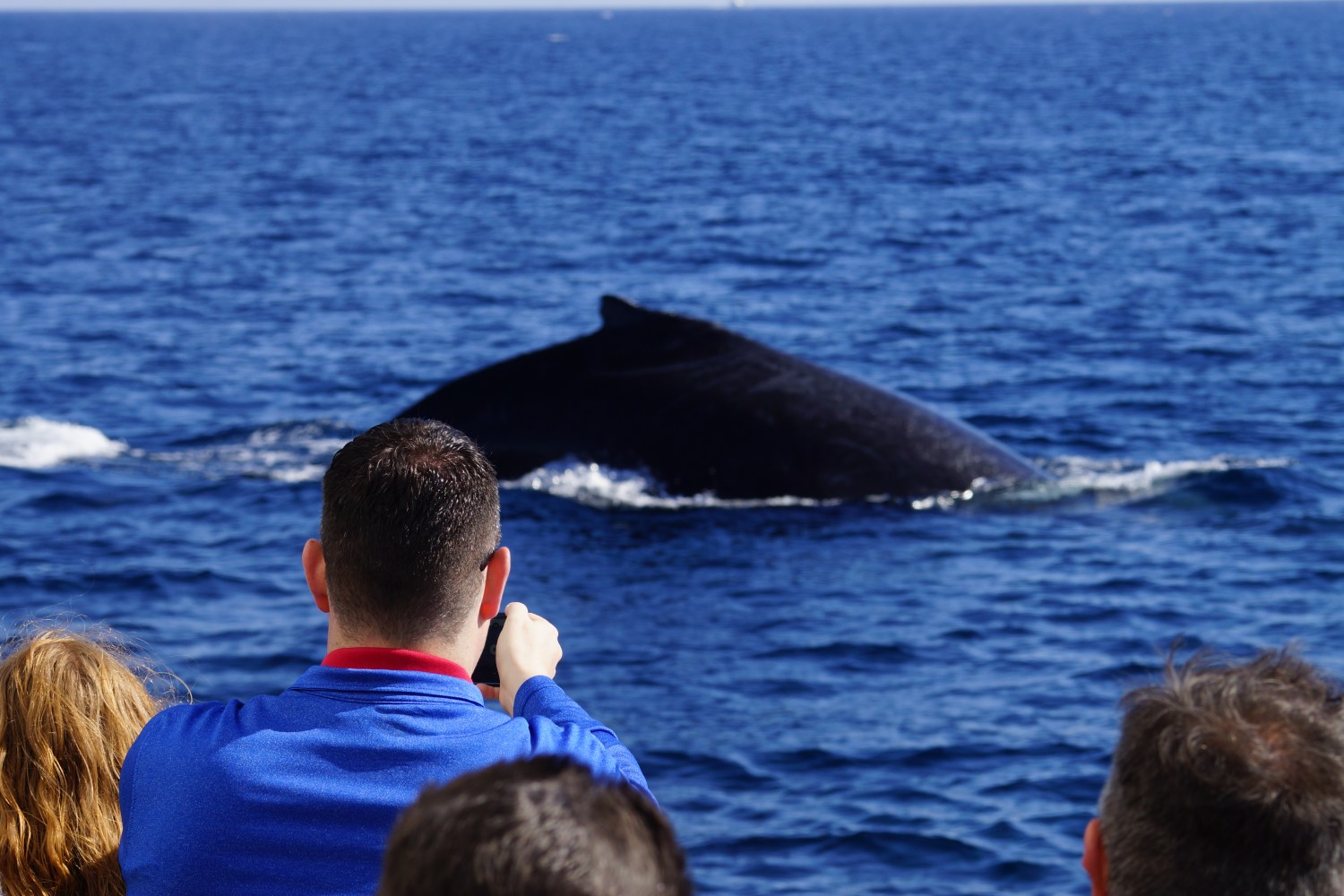
- Choose the Right Season: Check the migration patterns of the whales you’re hoping to see. Blue whales are best spotted in summer, while humpback whales are more visible in winter and early spring.
- Dress Appropriately: Weather on the ocean can be unpredictable. Dress in layers and bring a waterproof jacket to stay comfortable.
- Bring Essential Gear: Pack binoculars for a closer view, a camera with a zoom lens for capturing distant shots, and sunscreen for sun protection.
- Be Patient and Respectful: Whale watching requires patience and respect for wildlife. Maintain a safe distance and avoid disturbing the animals.
- Consider a Guided Tour: Experienced guides can enhance your experience with valuable insights and increase your chances of spotting whales.
Frequently Asked Questions
Which is bigger, a blue whale or a humpback whale?
The blue whale is significantly bigger — reaching up to 100 feet and 200 tons, compared to a humpback’s 40 to 60 feet and 25 to 40 tons.
Can you see blue whales and humpback whales on the same trip?
It’s possible in some locations, but the two species don’t reliably overlap everywhere. In San Diego, blue whales are the more common summer sighting; humpbacks are seen far more consistently in places like Hawaii and Alaska.
Which whale is louder, the blue whale or the humpback?
The blue whale. Its low-frequency calls are considered the loudest sounds produced by any animal, though humpback songs are more musically complex.
Do blue whales and humpback whales ever interact?
They can share feeding grounds since both eat krill, but they’re not known to travel or hunt together — each species tends to stick to its own social structure.
Which whale is easier to spot while whale watching?
Humpbacks are often easier to spot because of their frequent breaching and surface activity; blue whales are more subdued and typically show only a small dorsal fin and a long back at the surface.
Understanding the difference between a blue whale and a humpback whale enriches your whale-watching experience, helping you appreciate the unique traits of each species — and what connects them. On a Next Level Sailing trip out of San Diego, blue whales are your best bet for a true giant sighting, especially in summer, while gray whales round out the rest of the year. Book a San Diego whale watching tour to see these giants for yourself, guided by a crew that knows exactly where — and when — to look. Curious how long these whales actually live? Check out our guide to average whale lifespan by species.
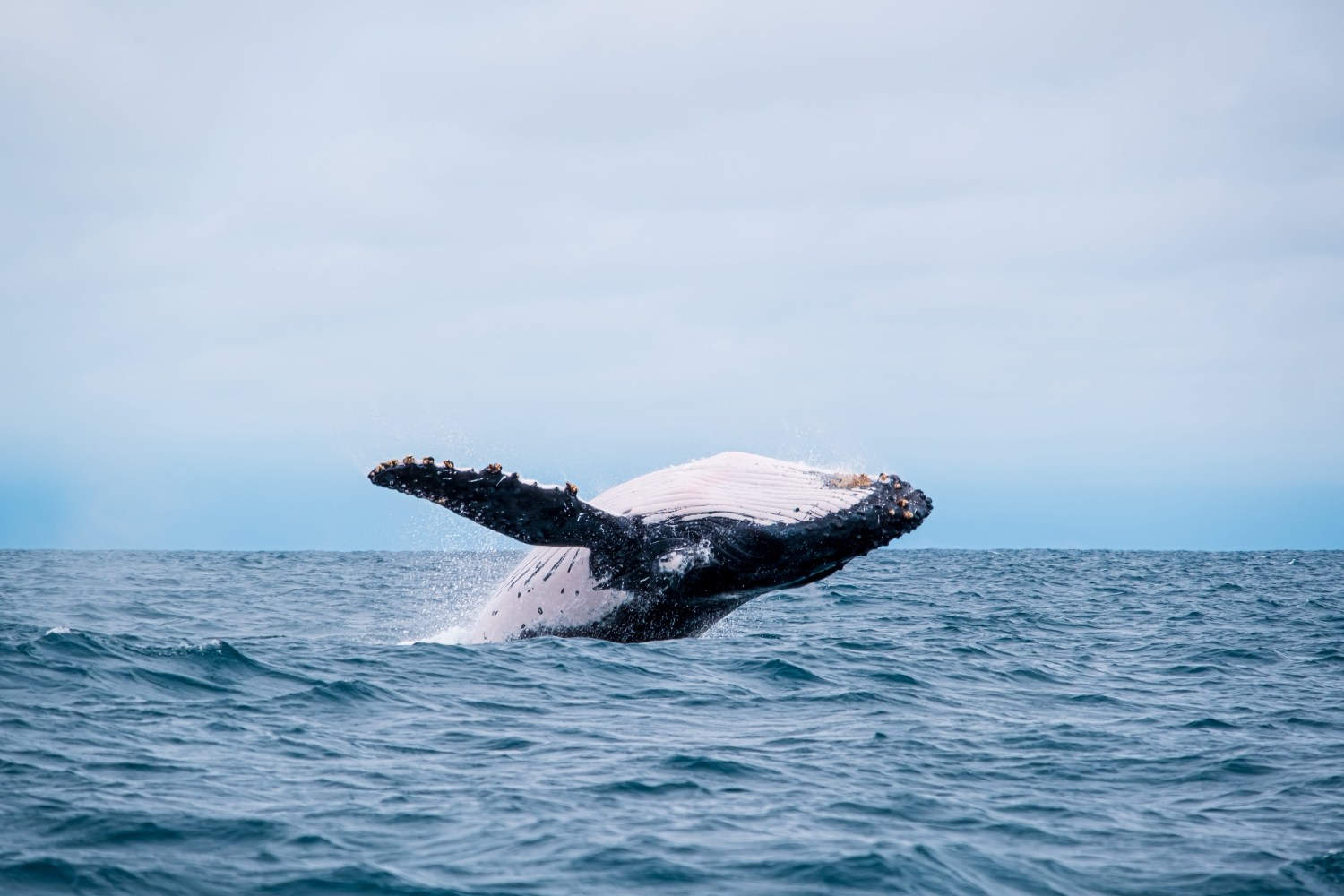
Whale watching offers a thrilling glimpse into the lives of these majestic marine giants, and two of the most awe-inspiring species you might encounter are the blue whale and the humpback whale. While both are breathtaking, several key differences set them apart — and a few important similarities connect them too. Here’s a detailed look at blue whale vs. humpback whale, covering size, appearance, migration, diet, sound, and tips for spotting each one on the water.
Quick Comparison
Here’s how the two species stack up at a glance:
| Category | Blue Whale | Humpback Whale |
|---|---|---|
| Length | Up to 100 ft | 40–60 ft |
| Weight | Up to 200 tons | 25–40 tons |
| Dorsal Fin | Small, set far back | Larger, curved |
| Diet | Krill only (filter feeding) | Krill, small fish, plankton (bubble-net feeding) |
| Migration Peak | Summer (June–Sept) | Winter–early spring (Dec–Apr) |
| Vocalization | Loudest animal on Earth; low-frequency pulses | Complex, melodic “songs” |
| Best Known For | Sheer size | Breaching & acrobatics |
Similarities Between Blue Whales and Humpback Whales
Despite their differences, blue whales and humpback whales have a lot in common. Both are baleen whales, meaning they filter food through comb-like plates instead of teeth. Both undertake long migrations each year between cold-water feeding grounds and warm-water breeding grounds. And both are protected species facing similar threats, including ship strikes, fishing gear entanglement, and ocean noise pollution.
Blue Whale Vs. Humpback Size & Appearance
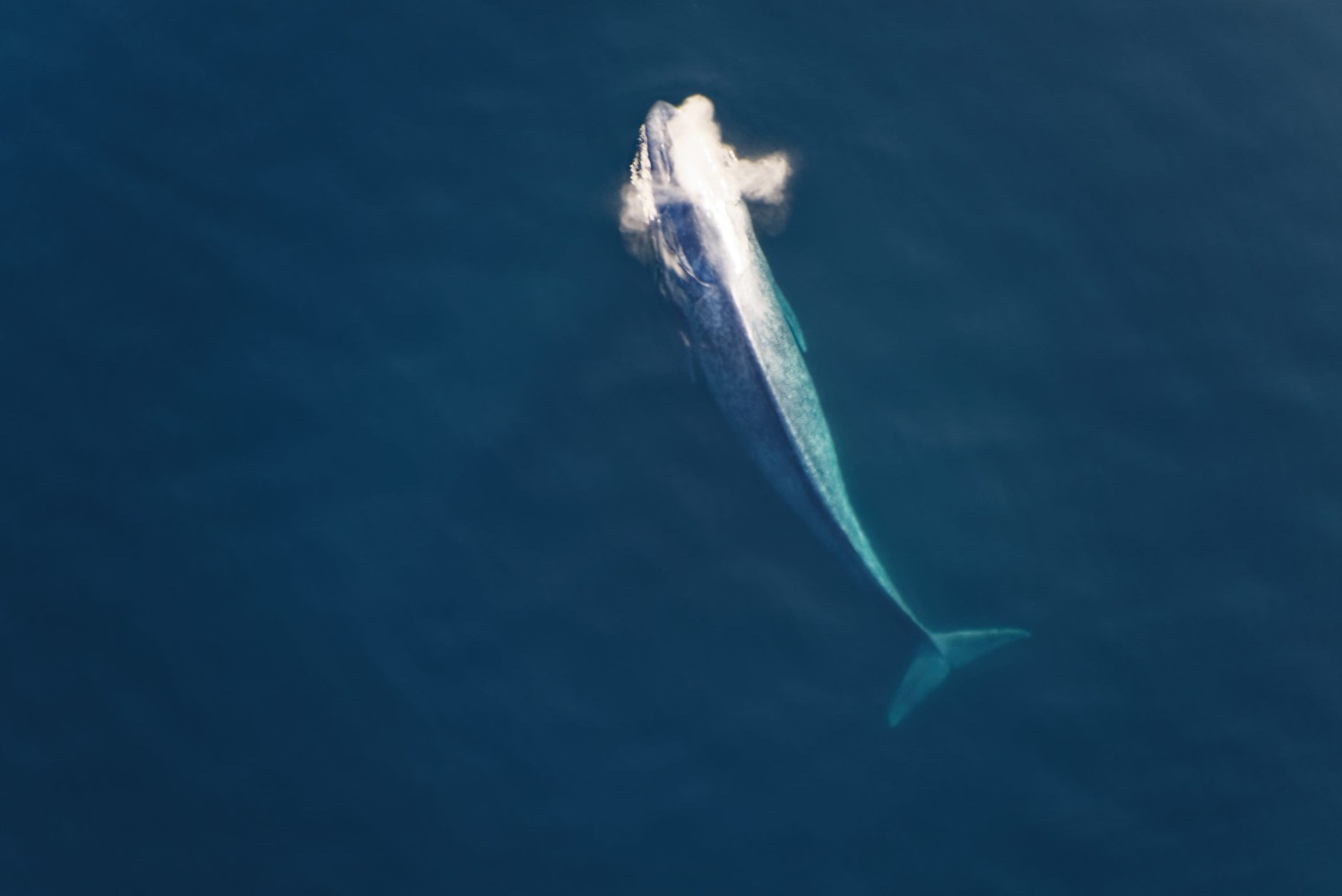
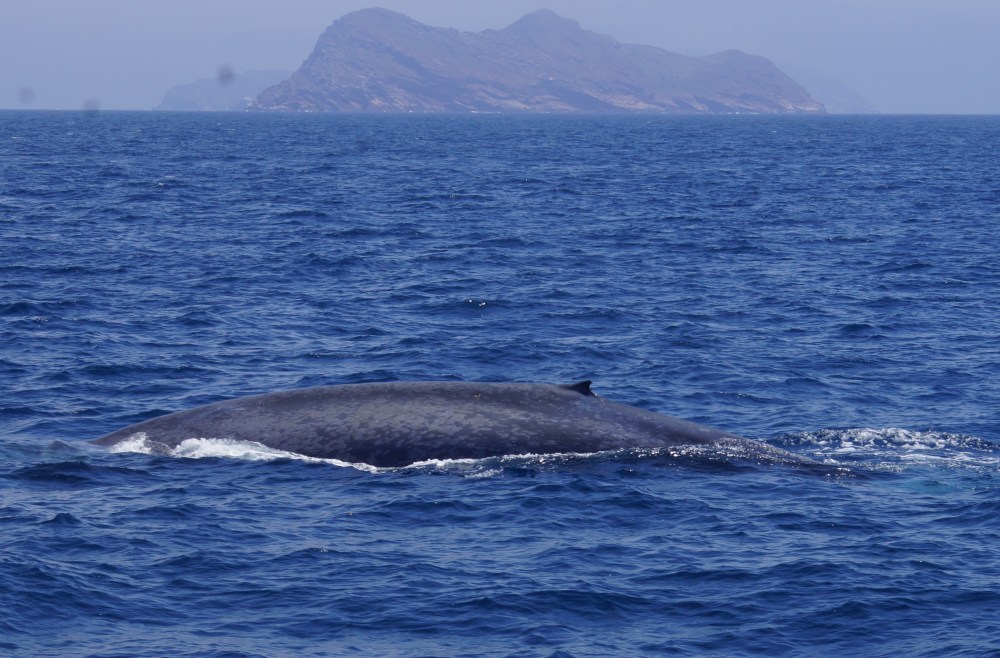
The difference between blue whale size vs. humpback is striking. The blue whale is the largest animal known to have existed, reaching lengths of up to 100 feet and weighing as much as 200 tons. It has a long, streamlined, blue-gray body and a small dorsal fin set far back near the tail.
In contrast, humpback whales are significantly smaller, with lengths of about 40 to 60 feet and weights ranging between 25 to 40 tons. They are easily recognized by their distinctive body shape, which includes a knobby head covered in bumps called tubercles, long pectoral fins, and a noticeable hump in front of a larger, more curved dorsal fin. Humpbacks are also known for their intricate and melodic songs, which are not heard in the blue whale’s repertoire — more on that below.
Blue Whale Vs. Humpback Sound
Sound is one of the most distinctive differences between the two species. Blue whales are the loudest animals on Earth, producing low-frequency calls that can travel for hundreds of miles underwater. Humpback whales, by contrast, are known for complex, structured “songs” made up of moans, cries, and howls that can last for hours and change from season to season — one of the most studied vocal behaviors in the animal kingdom.
Blue Whale Vs. Humpback Migration Habits
Both blue and humpback whales undertake impressive migrations, but their patterns and destinations differ. Blue whales typically follow a migratory route between feeding grounds in polar waters and breeding grounds in tropical or subtropical waters. They spend the summer months in colder waters where food is abundant and migrate to warmer waters during the winter to breed and give birth.
Humpback whales also migrate but on a slightly different scale. They usually travel from feeding grounds in colder waters to breeding grounds in warmer tropical and subtropical waters. The migration can span thousands of miles, and their journey is often more noticeable due to their frequent breaches and surface activity compared to the more subdued blue whale.
Blue Whale Vs. Humpback Diet
The dietary habits of blue whales and humpback whales highlight another difference. Blue whales are filter feeders that primarily consume tiny shrimp-like animals called krill. They can ingest up to 4 tons of krill daily. Their feeding method involves gulping large amounts of water and using their baleen plates to filter out the krill.
Humpback whales have a more varied diet. While they also consume krill, they are known for their diverse feeding strategies, including bubble-net feeding, where they create a bubble curtain to corral schools of fish. They feed on small fish, plankton, and krill, and their feeding habits can be more visually spectacular compared to the more systematic approach of blue whales.
Best Time & Places to See Blue Whales
If you’re eager to see blue whales, timing and location are essential. The best time to spot blue whales is during their migration from June to September. They are seen in areas with abundant krill, such as the waters off Southern California, Alaska, and Sri Lanka, according to NOAA Fisheries. These regions offer some of the best opportunities for blue whale sightings, especially during the peak summer months — San Diego included.
Best Time & Places to See Humpback Whales
Humpback whales are also most frequently seen during specific seasons — their migration peaks from December to April when they breed in warmer waters. Popular locations for humpback whale watching include the waters around Hawaii, Alaska, and the Caribbean. Humpback sightings off San Diego do happen, but they’re far less consistent than blue whale or gray whale sightings here — if seeing a humpback up close is your top priority, Hawaii or Alaska will give you better odds.
Tips for Your Next Whale Watching Trip
To make the most of your whale watching adventure, consider these tips:
-
- Choose the Right Season: Check the migration patterns of the whales you’re hoping to see. Blue whales are best spotted in summer, while humpback whales are more visible in winter and early spring.
- Dress Appropriately: Weather on the ocean can be unpredictable. Dress in layers and bring a waterproof jacket to stay comfortable.
- Bring Essential Gear: Pack binoculars for a closer view, a camera with a zoom lens for capturing distant shots, and sunscreen for sun protection.
- Be Patient and Respectful: Whale watching requires patience and respect for wildlife. Maintain a safe distance and avoid disturbing the animals.
- Consider a Guided Tour: Experienced guides can enhance your experience with valuable insights and increase your chances of spotting whales.
Frequently Asked Questions
Which is bigger, a blue whale or a humpback whale?
The blue whale is significantly bigger — reaching up to 100 feet and 200 tons, compared to a humpback’s 40 to 60 feet and 25 to 40 tons.
Can you see blue whales and humpback whales on the same trip?
It’s possible in some locations, but the two species don’t reliably overlap everywhere. In San Diego, blue whales are the more common summer sighting; humpbacks are seen far more consistently in places like Hawaii and Alaska.
Which whale is louder, the blue whale or the humpback?
The blue whale. Its low-frequency calls are considered the loudest sounds produced by any animal, though humpback songs are more musically complex.
Do blue whales and humpback whales ever interact?
They can share feeding grounds since both eat krill, but they’re not known to travel or hunt together — each species tends to stick to its own social structure.
Which whale is easier to spot while whale watching?
Humpbacks are often easier to spot because of their frequent breaching and surface activity; blue whales are more subdued and typically show only a small dorsal fin and a long back at the surface.
Understanding the difference between a blue whale and a humpback whale enriches your whale-watching experience, helping you appreciate the unique traits of each species — and what connects them. On a Next Level Sailing trip out of San Diego, blue whales are your best bet for a true giant sighting, especially in summer, while gray whales round out the rest of the year. Book a San Diego whale watching tour to see these giants for yourself, guided by a crew that knows exactly where — and when — to look. Curious how long these whales actually live? Check out our guide to average whale lifespan by species.