
Bioluminescence in San Diego
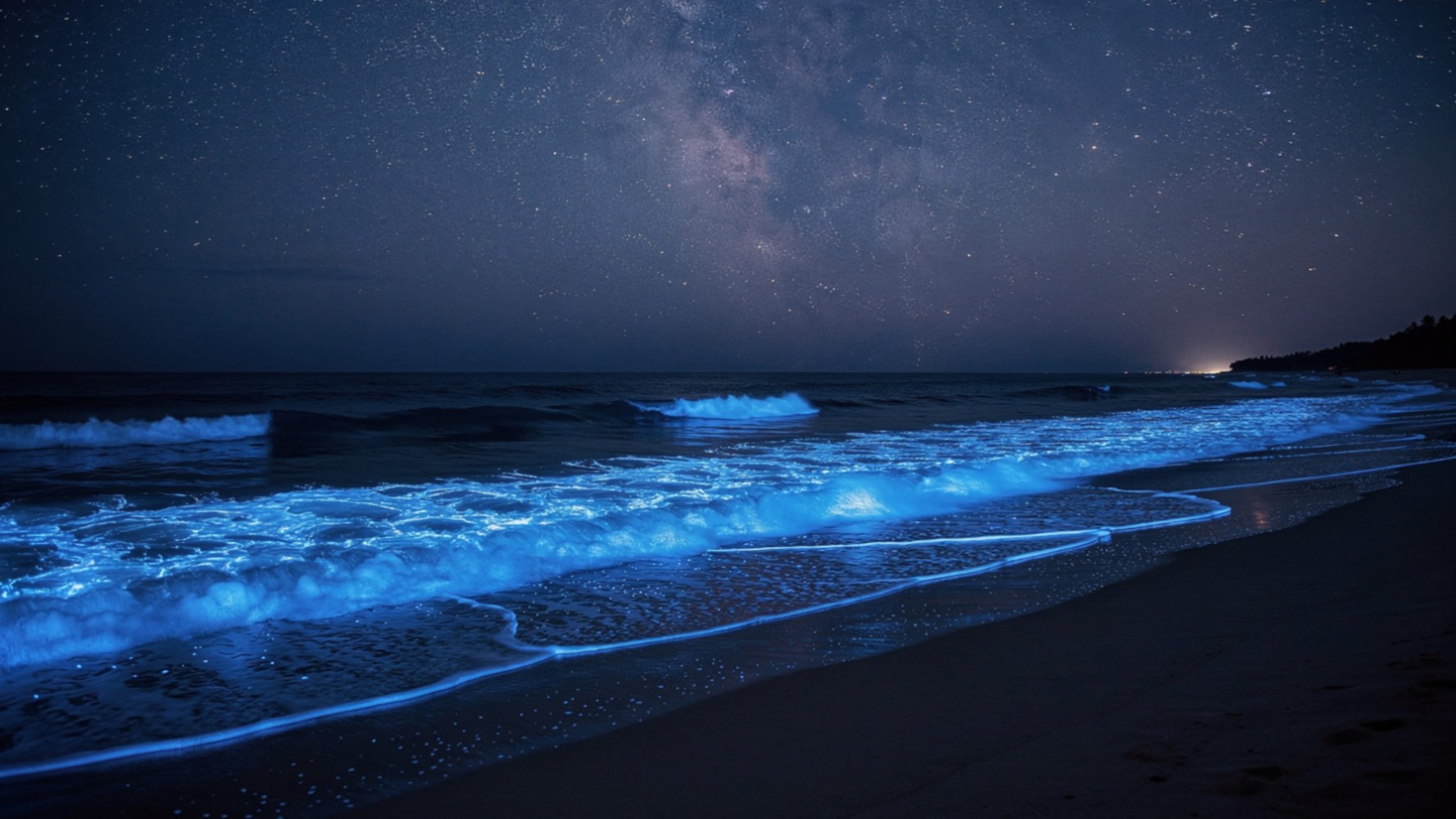
Imagine waves breaking in a flash of electric blue, or a dolphin leaving a glowing trail as it cuts through the dark water. It sounds like something out of a movie, but in San Diego it’s real. Every so often, the ocean lights up with bioluminescence, and locals and visitors flock to the coast to see it.
Here’s what causes San Diego’s glowing waves, when and where you’re most likely to see them and how to make the most of it when the glow returns.
What Causes Bioluminescence in San Diego?
The glow comes from tiny single-celled organisms called dinoflagellates. In San Diego, the main one is a species called Lingulodinium polyedra.
Most of the time, these plankton are spread thin and go unnoticed. But when conditions are right, with calm seas, warm water and plenty of nutrients, their numbers explode into a bloom. During the day, a dense bloom tints the water a reddish brown, which is why it’s called a red tide.
At night, the same bloom puts on a light show. Dinoflagellates give off a flash of blue light when they’re disturbed by movement. A breaking wave, a passing boat, a swimming fish or even your hand in the water can set them off. Scientists believe the flash helps protect them from predators by startling them or drawing attention to whatever is trying to eat them.
This isn’t a new phenomenon. Researchers at Scripps Institution of Oceanography in La Jolla have documented San Diego’s red tides since the early 1900s.
When and Where to See It
When: Bioluminescent red tides are hard to predict. They most often show up in spring or fall, though winter events have happened too. Some last only a week, while others hang around for a month or more. A red tide in October 2011 lasted about a month, while one in September 2013 faded after a week.
What time: The darker, the better. Wait until at least an hour after sunset, and try to go on a night with little or no moonlight.
Where: When a bloom is underway, popular viewing spots include:
- La Jolla Shores
- Scripps Pier
- Pacific Beach and Mission Beach
- Black’s Beach
- Coronado and Ocean Beach
The best way to know if the glow is back is to watch local news and social media. When a bloom hits, word spreads fast.

Tips for Seeing the Glow
- Let your eyes adjust. Put your phone away for 10 to 15 minutes. Your night vision will pick up far more of the glow.
- Skip the flashlight. Bright lights wash out the effect for you and everyone around you.
- Make some motion. Stomp along the wet sand at the water’s edge, and watch the glow follow your footprints.
- Use a long exposure. Most phone cameras struggle with the glow. A tripod and a night or long-exposure setting will give you much better photos.
- Look, don’t swim. Watching is perfectly safe. Red tide water can carry bacteria and has a strong odor, so many people choose to stay dry.
Seeing Bioluminescence From the Water
The shoreline isn’t the only place to see the glow. During a bloom, anything moving through the water can light it up, including a boat’s wake, schools of fish and even dolphins. Videos of dolphins racing through glowing water off Southern California have amazed viewers around the world.
Every bloom is different, and no one can promise when one will appear. But an evening on the water during a red tide gives you a view most beachgoers never get.
Frequently Asked Questions
Is bioluminescence in San Diego right now?
It comes and goes with red tide blooms, which are hard to predict. Check local news and social media for recent sightings.
What month is best for bioluminescence in San Diego?
There’s no guaranteed month, but blooms most often appear in spring and fall.
Is it safe to swim in bioluminescent water?
Watching from shore or a boat is safe. Red tide water can have high bacteria levels and a strong smell, so it’s best to check local water quality advisories before going in.
Does bioluminescence happen in San Diego Bay?
Blooms are most often seen along the open coast, but they can drift into nearby waters. When they do, boat wakes and marine life can light up the water.
Get Out on the Water
Bioluminescence is just one of the ways San Diego’s ocean surprises people. On any given day, you might also spot dolphins, sea lions or whales from the deck of The Yacht America.
Join us for a whale watching tour, an evening cocktail cruise or a private charter for your group. Curious about what’s been spotted lately? Check our whale watching report, or call (619) 577-4008 to plan your sail.